FinTech
Service Design
B2B
From Paper Trails to Scalable Platforms
Redesigning Financial Workflows in a Global Bank
Led design through regulatory complexity and organizational silos - aligning global stakeholders to deliver a scalable B2B platform.
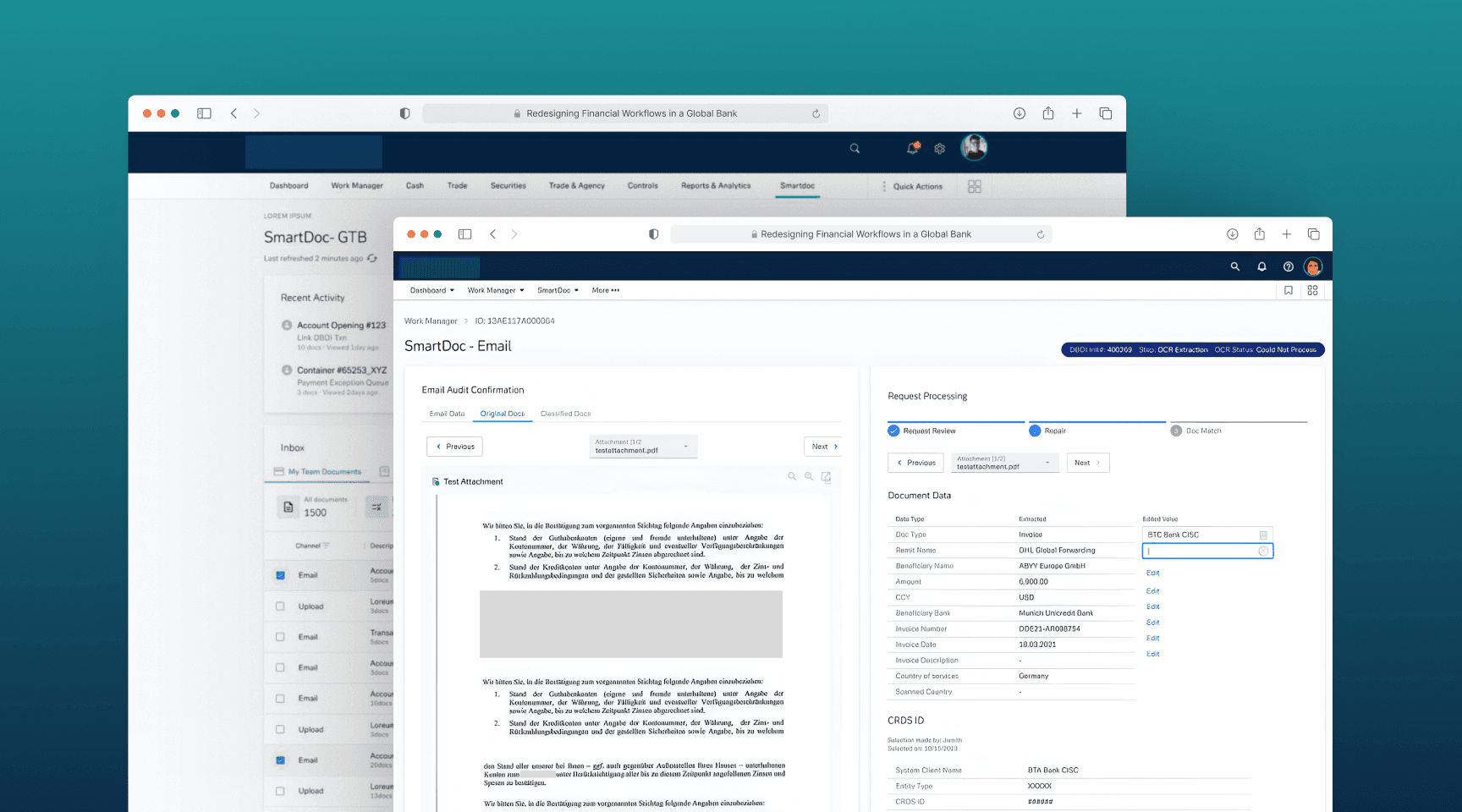
Industry
Financial Services
Team
2 person design team + engineering and business team
Role
Service Designer, UX Strategy, Research
Context
The Bank was undergoing a global document digitization initiative to increase operational efficiency and regulatory compliance through automation. The new system would need to support diverse use cases across departments and geographies.
Deloitte was brought in to support this transformation. Our design team (just two of us) was handed the task of creating the new UI and user experience.
My Role & Impact
Took initiative to reframe project scope and push for research
Mapped existing processes by meeting with cross-functional teams
Created shared vocabularies across business and design
Facilitated workshops and user interviews with stakeholders in EMEA and APAC
Earned trust of both Deloitte leadership and client-side decision makers
Beyond pixel perfect designs
Design is leadership in complexity
Embracing the Unknown as Strategy
Designing for a Global 500 bank with no initial brief, no access to internal systems, and an impossible deadline revealed the true nature of design leadership.
Two designers, four weeks, infinite stakeholders with conflicting needs
We were expected to deliver a user interface with no clear hierarchy, no unified vision, and no time for traditional discovery, leadership meant creating alignment where none existed and building consensus without formal power.
Creating Conditions, Not Solutions
We couldn't design the perfect interface without knowing the system, so we designed the perfect process for discovering it- rapid prototypes became conversation starters, sketches became decision-making tools.
Problem
Manual document handling was eating up 40% of staff time that should have been spent on meaningful work.
The key is that it's not really about documents or systems- it's about people doing repetitive work that prevents them from doing their real jobs.
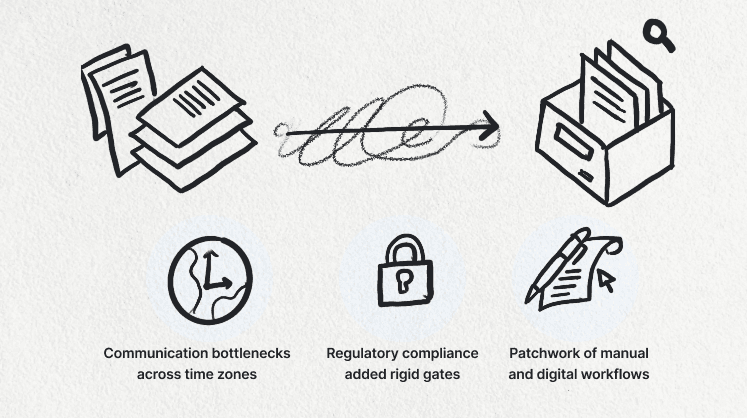
Solution
A smart document management system that automatically processes, classifies, and routes documents while ensuring only authorized users can access and act on them according to banking regulations.
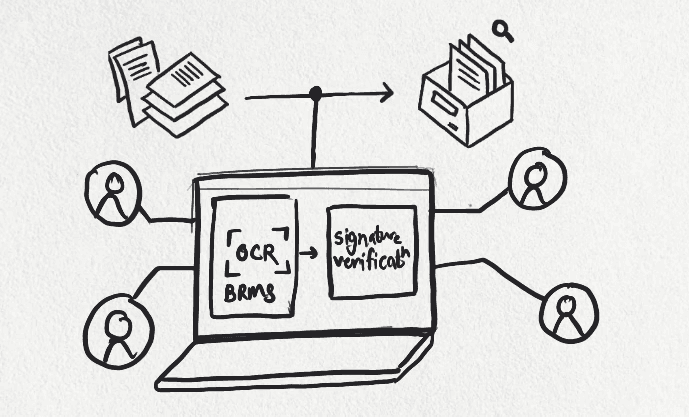
Think of it as a smart Google Drive that reads documents, creates work assignments for different teams automatically, and manages who can do what based on banking regulations - so documents flow smoothly through workflows instead of getting stuck in email chains.
“Why can’t I just do it on paper? It’s faster!”
-an analyst told me during our first round of interviews. That moment hit hard. Despite millions invested in tooling, trust in the system was eroding.
It wasn’t just a tech problem- it was a people problem disguised as inefficiency.
Our mission: build a global document management system that works for users—not just workflows.
Below are two independent workflows that needed to be unified into one adaptable system.
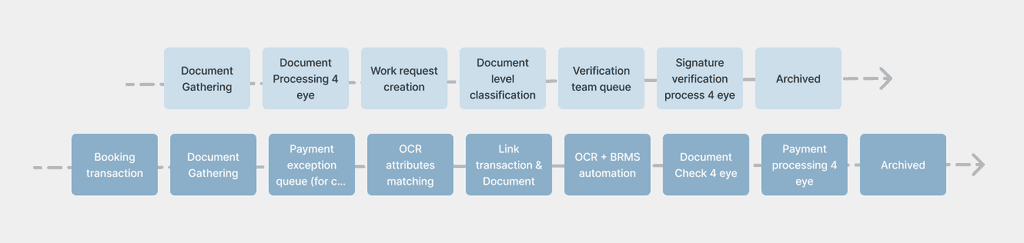
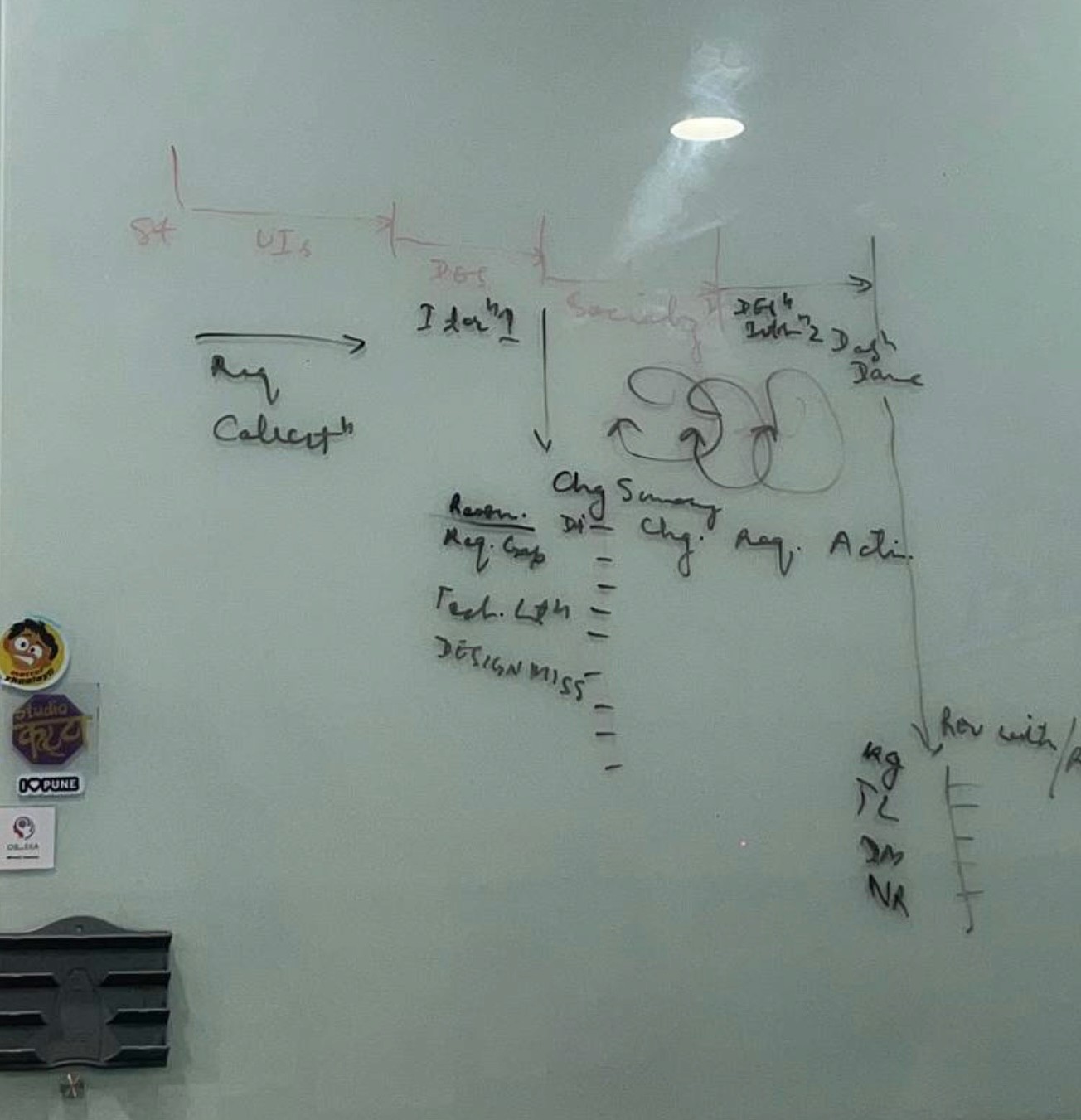
lots of whiteboard discussions on the approach
Research Approach
We began with what we didn’t know—and built a plan to change that.
I worked with our internal team to push for a research phase before diving into mockups. I proposed a two-week sprint dedicated to contextual understanding. It was a tough sell—but I got buy-in by framing it as risk mitigation: how could we design for global scale when we didn’t understand even one team's workflow?
We:
Conducted stakeholder interviews across 5+ teams in 3 different time zones
Translated jargon-heavy process maps into service blueprints
Broke down the document lifecycle- from creation, to review, to regulatory archive
We discovered that the biggest pain points weren’t UI-specific. They were about handoffs, compliance steps, and lack of transparency.
So instead of just designing screens, we co-created new workflows.
Yes, we built a lot of artefacts on the way, sharing limited information due to NDAs. DM me to learn more.
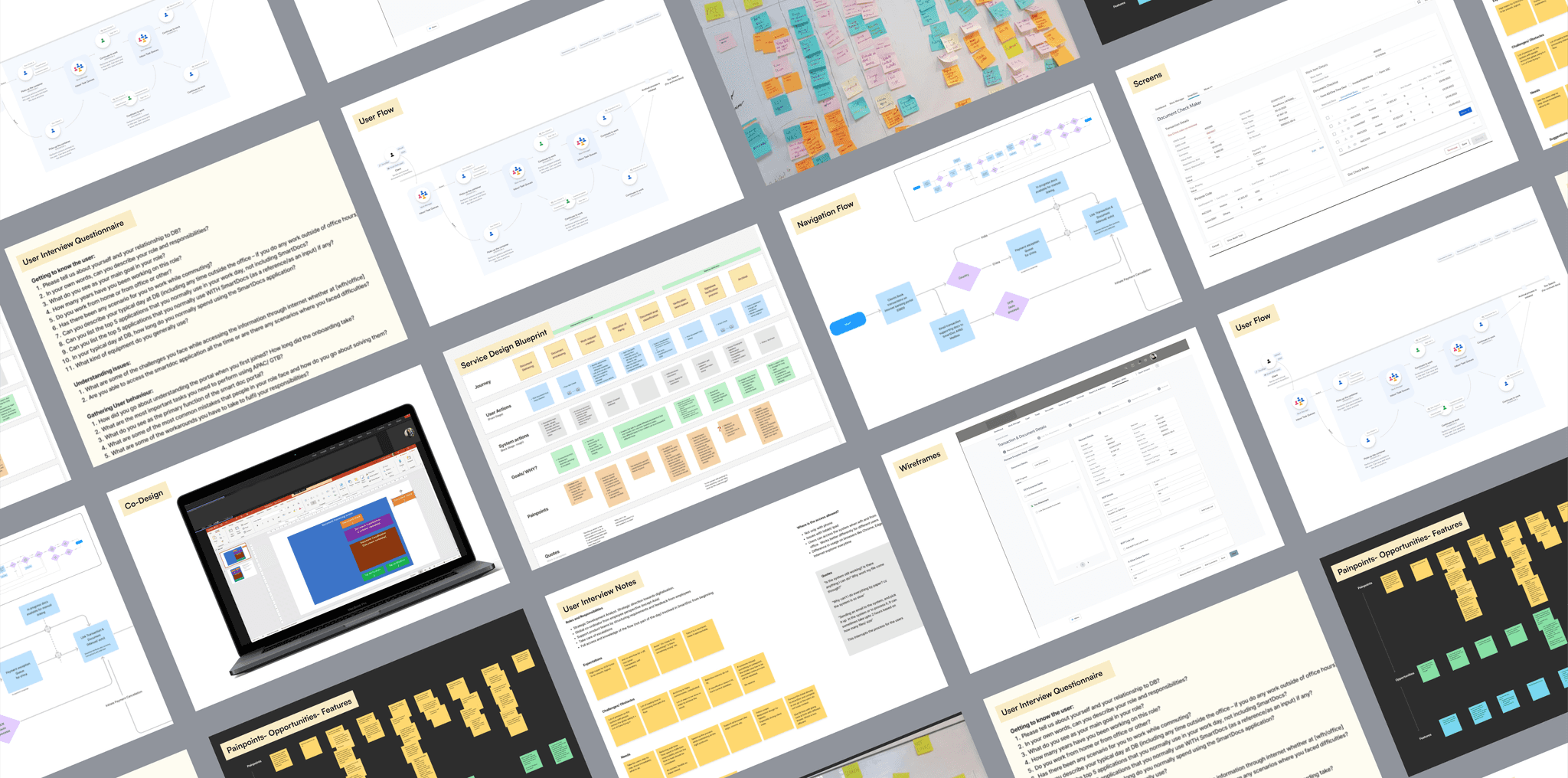
Product Features we shipped
OCR/ ML
Smart tagging and metadata fields to simplify classification
Step by Step process to enhance visibility of the workflow.
Contextual information all at one place, instead of navigating into different systems, platforms.
Team Dashboard and work manager to improve collaboration between teams and individuals.
Ability to link payments, documents, data, signatures, etc into the document workflow for an end-to-end archiving process

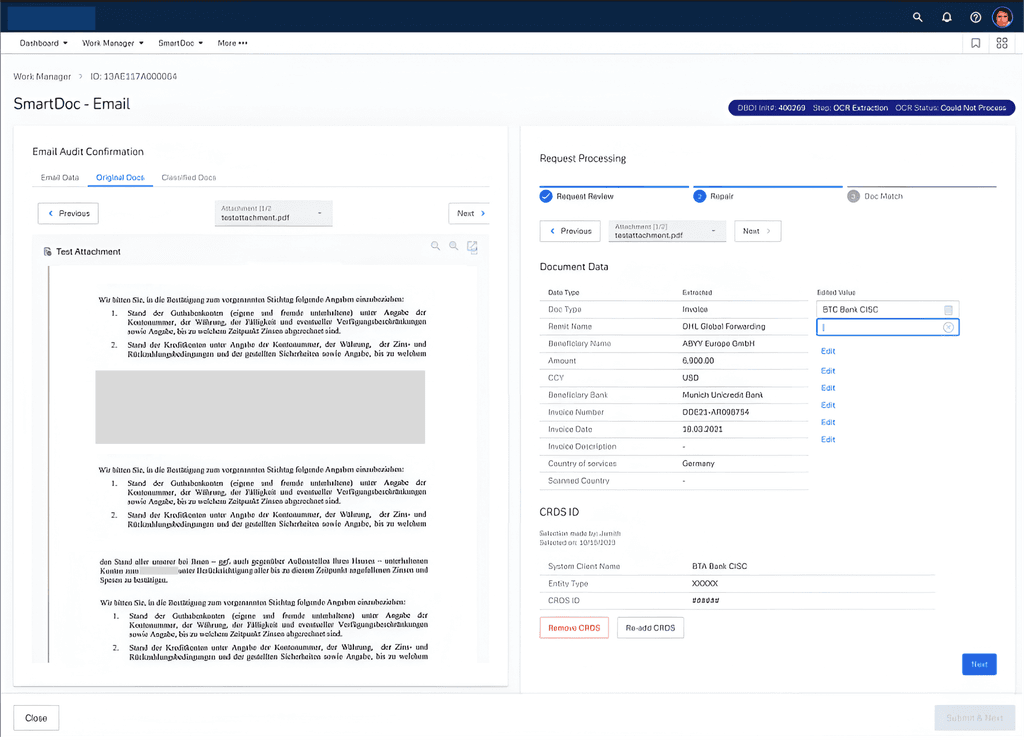
Systems = Process + People + Platforms + Interactions
Designing this felt like mapping a river system during a storm.
Different streams of information merged and split unpredictably. Currents (timelines, stakeholders, tech constraints) pushed us in directions we didn’t anticipate. But we found flow by constantly reorienting to the banks: people, policy, and context.
What I enjoyed & take forward from this project
Bringing order to chaos
Untangling a complex, fragmented system and turning it into a streamlined, intuitive experience was deeply satisfying.
Impact at scale
The real win? People spending less time wrestling with processes and more time doing meaningful work.
Automation meets adaptability
AI and automation are exciting, but integrating them intelligently- where they empower rather than overwhelm - was the real challenge. Designing tech that works with people, not just for them, is the future.
Operations are an ecosystem
This project reinforced the power of designing systems, not just screens-something I’ll carry forward into every project.