SaaS Enterprise
Start-up
Computer Vision
Automating visual
inspection QC at scale
Revolutionizing quality control in manufacturing through visual inspection automation.
Industry
Manufacturing
Team
<10 person team
Role
Product strategist, Product manager, Designer
What is it?
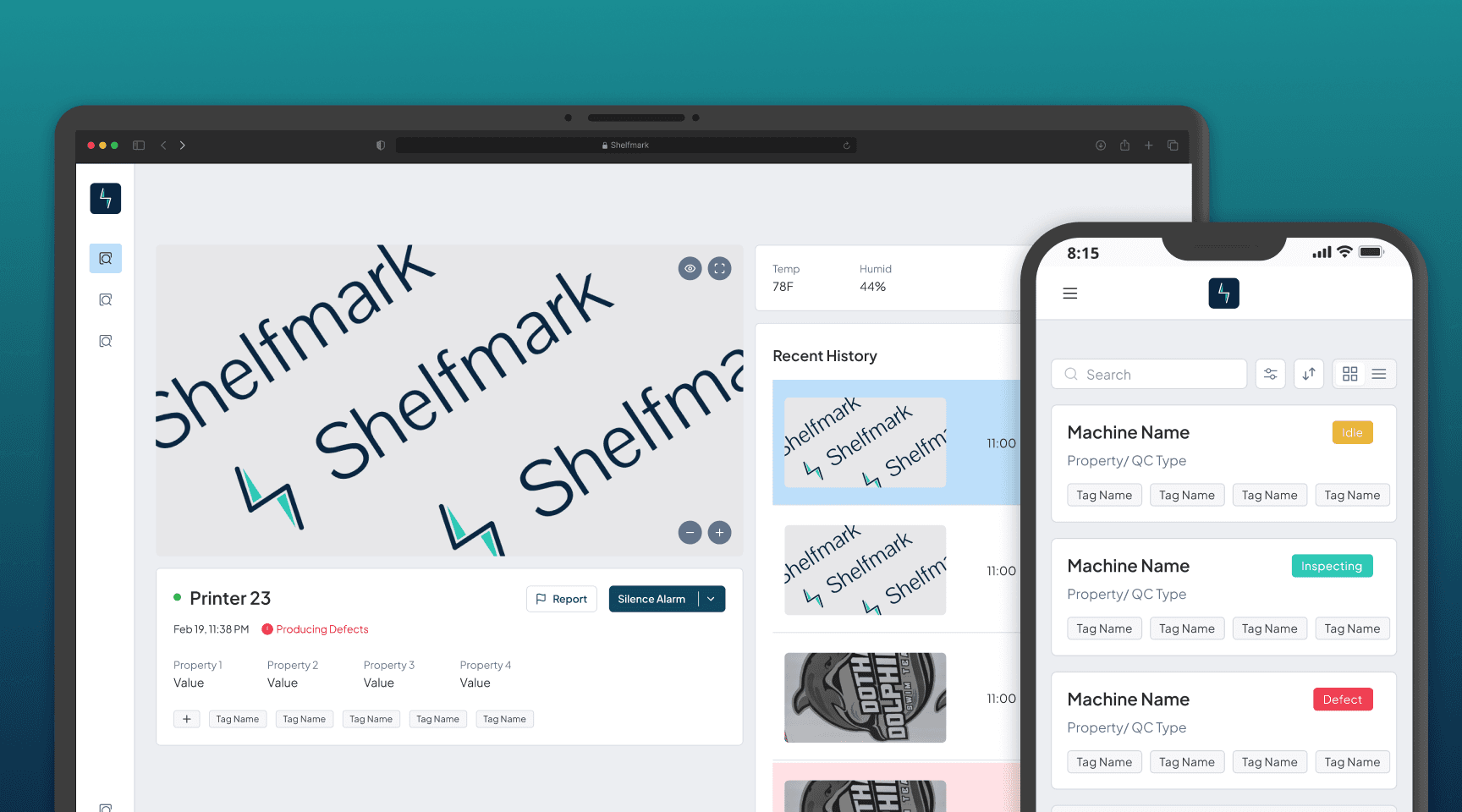
Shelfmark is a computer vision platform that automates visual inspection across manufacturing lines to reduce defects, rework, and waste.
My Role
I led product and UX design across multiple touchpoints, from dashboard interfaces to real-time monitoring and defect visualization, in close collaboration with engineering, operations, and technicians.
Also explored LiDAR, sensor technologies, and camera systems (area and line-scan) to design concepts for safety manufacturing and create dashboards involving lots of data.
Beyond pixel perfect designs
Design is contextual: Negotiation & Relationship building
My role
My role was more than creating interfaces, it was also negotiating between different product priorities of team members, operational constraints, and user contexts.
Three-Way Balance
Technical: Can a small engineering team build this today? Business: Will this help land new customers? User: Does this simplify or complicate their job?
Constraints
Machines moving at 600ft/hr Clunky software UI in manufacturing setting (Jakob's law) Hardware integration (different types of cameras, alarms) Physical environmental conditions (lighting, alignment, internet connection issues) Operators in different day and night shifts
Problem
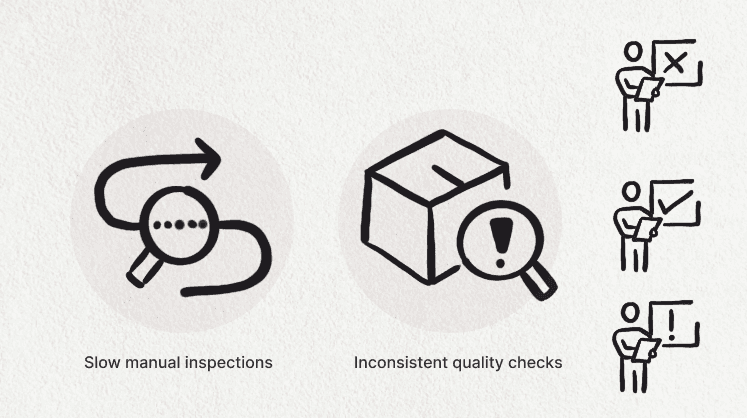
Manufacturing products like film, fabric, and paper often develop subtle surface defects. Manual inspection is error-prone, inconsistent, and costly.
Solution
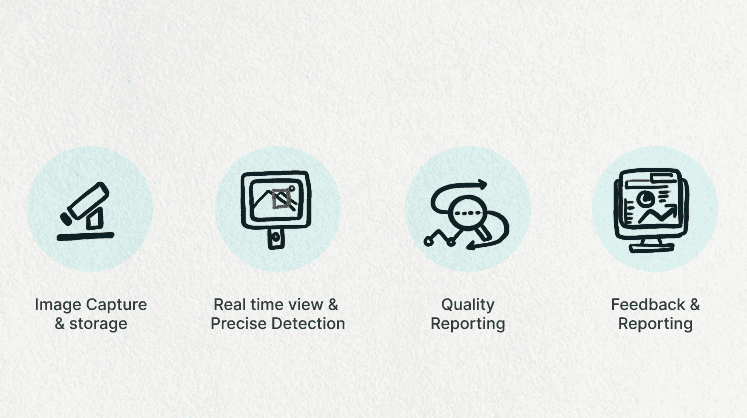
We designed a Managed AI platform that visualizes and alerts teams to visual defects in real-time, helping them shift from reactive correction to proactive prevention ultimately saving time, cost, and waste.
Outcome & Impact
Created the first scalable UX framework for Shelfmark’s deployment
Platform adopted by operators and managers in dynamic, fast-paced facilities
Supported roadmap prioritization with on-the-ground insights and technical collaboration
Contributed to multiple customer pilot wins and faster AI iteration cycles
Why This Matters
Products like plastic sheets, wood products, custom apparel, paper products, etc., often develop surface-level defects during manufacturing (e.g, discoloration, banding).
These inconsistencies lead to millions of dollars in:
Rework
Labor
Waste
Missed impact and poor consistency
Shelfmark enables:
Real-time visibility and alerts
Human-in-the-loop feedback to train AI
Scalable deployment across machine types & speeds (upto 600 ft/min)
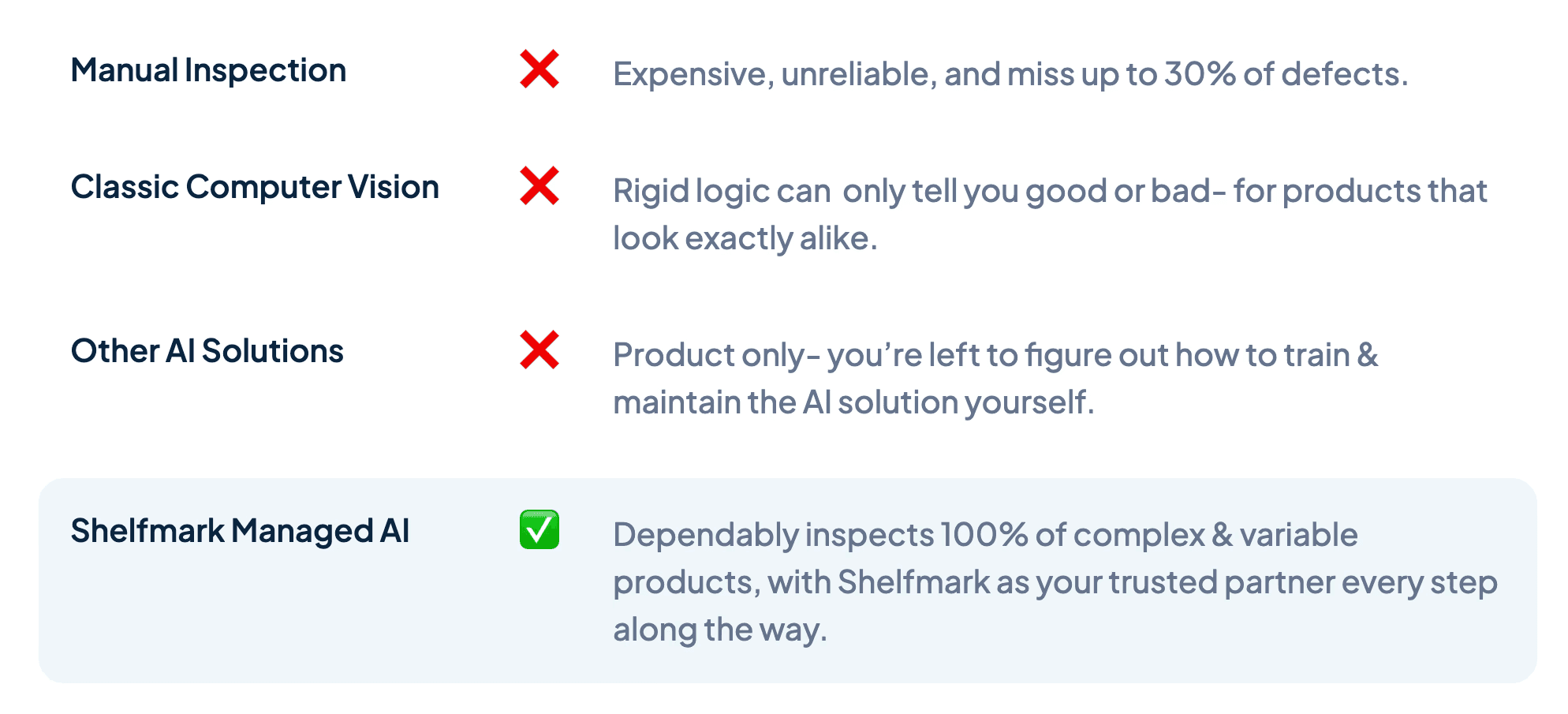
Market Comparison &
Differentiator
My Contributions & Key Features
Explore how data, design, and AI came together to give visibility across miles of production.
Design Infrastructure
Built design systems from scratch with a second designer to ensure consistency across a growing platform
Organized Figma and design review processes across product, UX, and engineering
Core Product Features
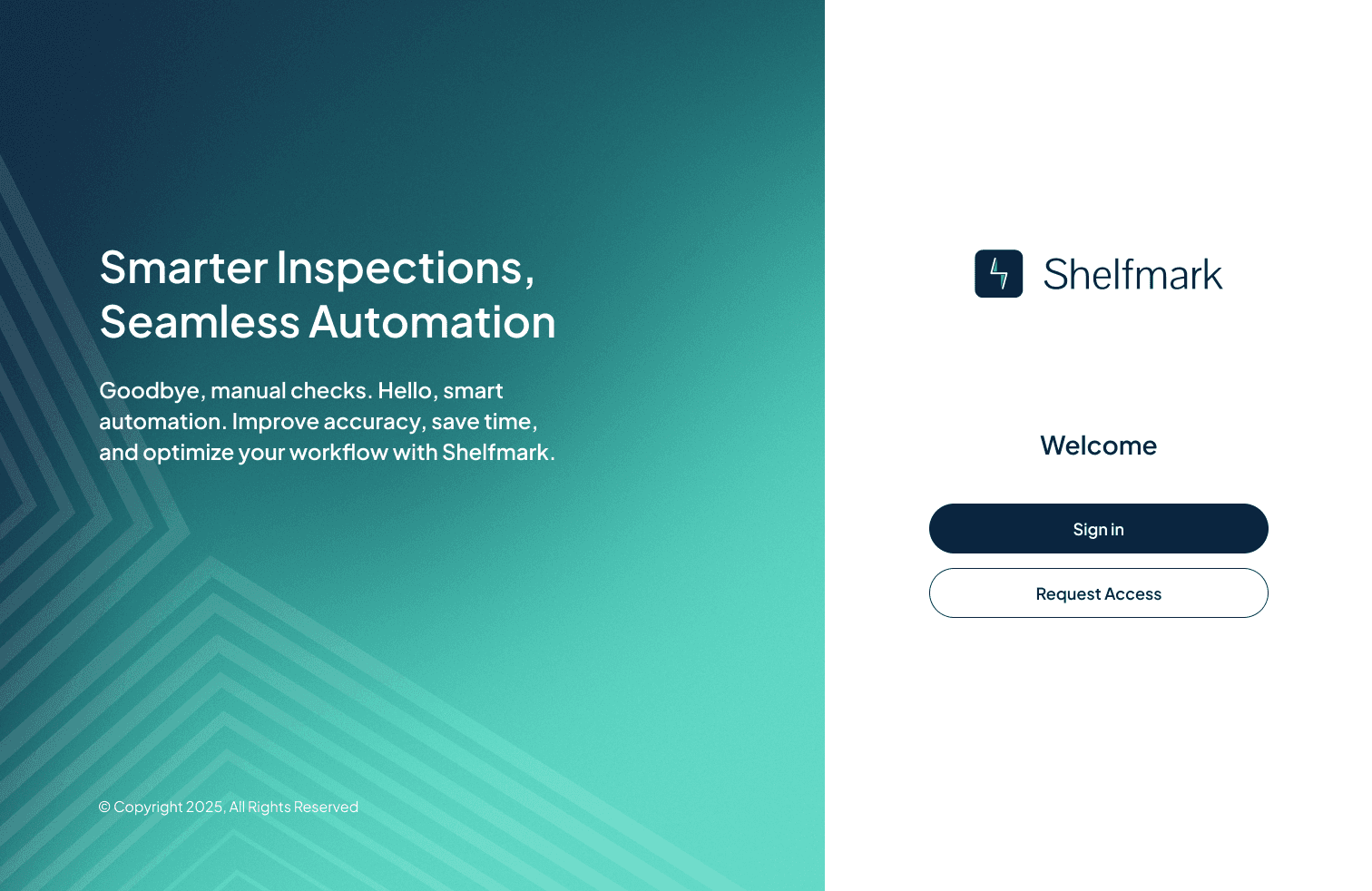
Login + Onboarding
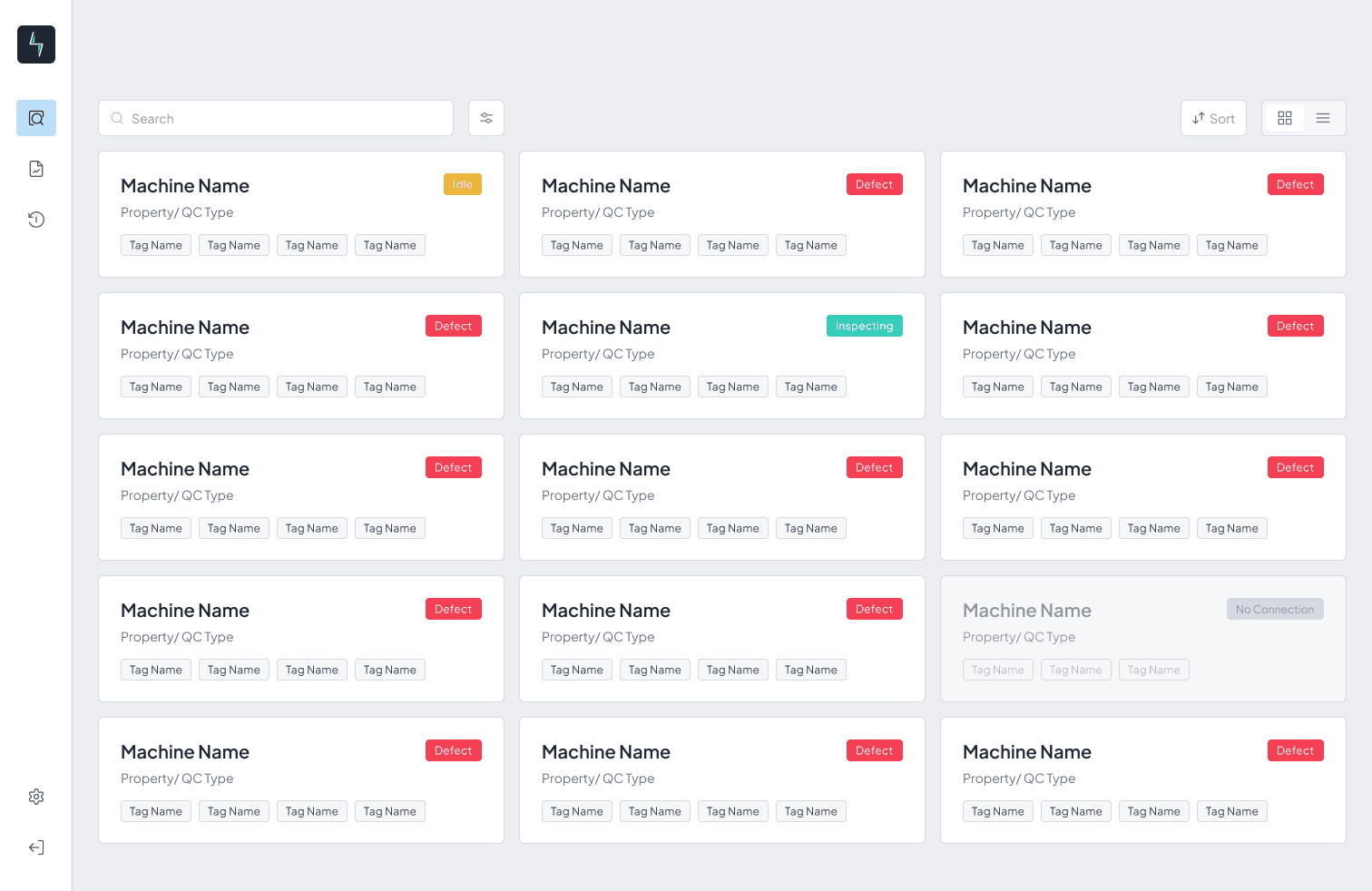
Dashboard Overview
Machine-level health + defect status at a glance
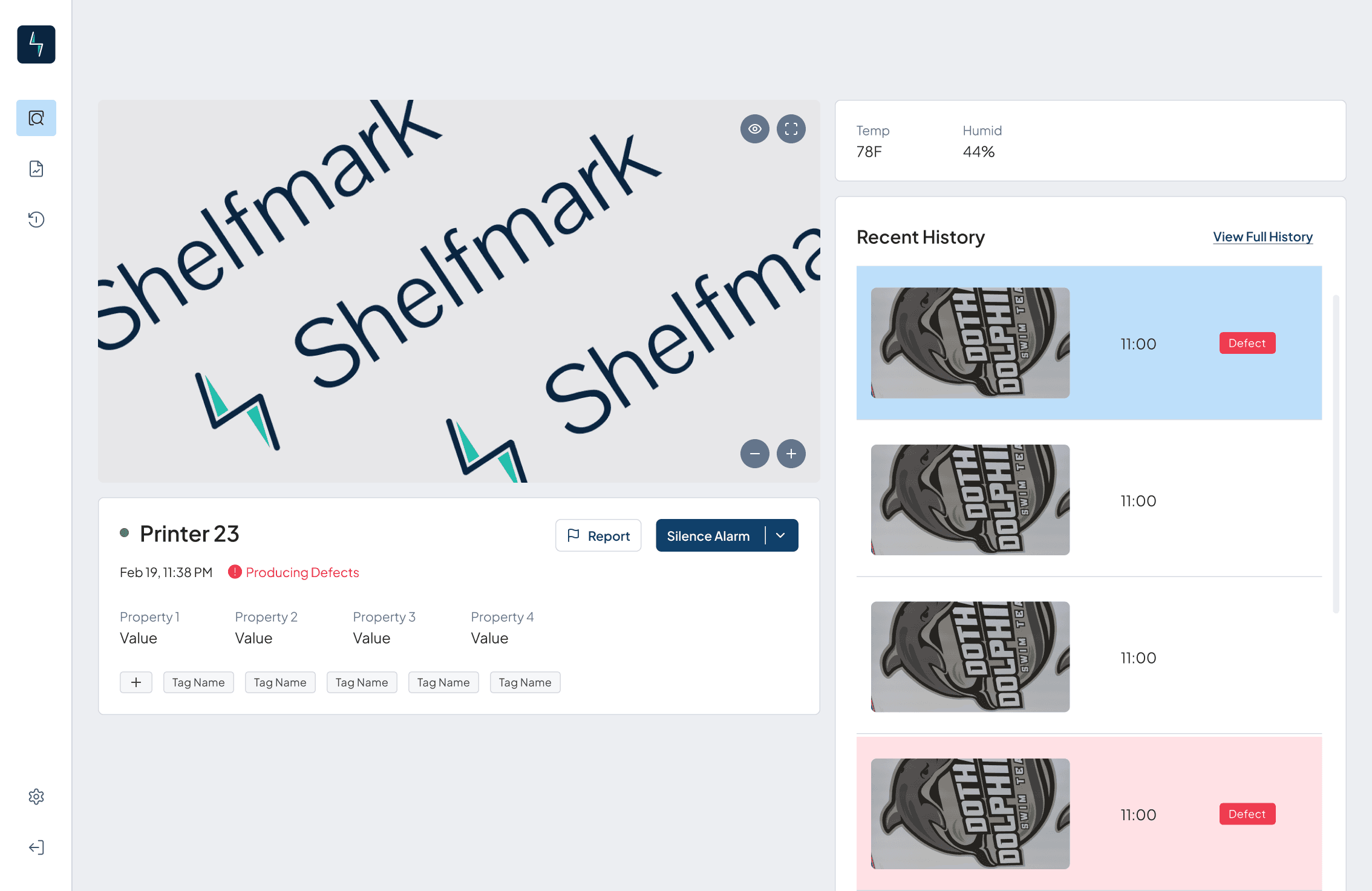
Live Monitoring UI
Integrated alerts, history playback, image types, and false positive feedback
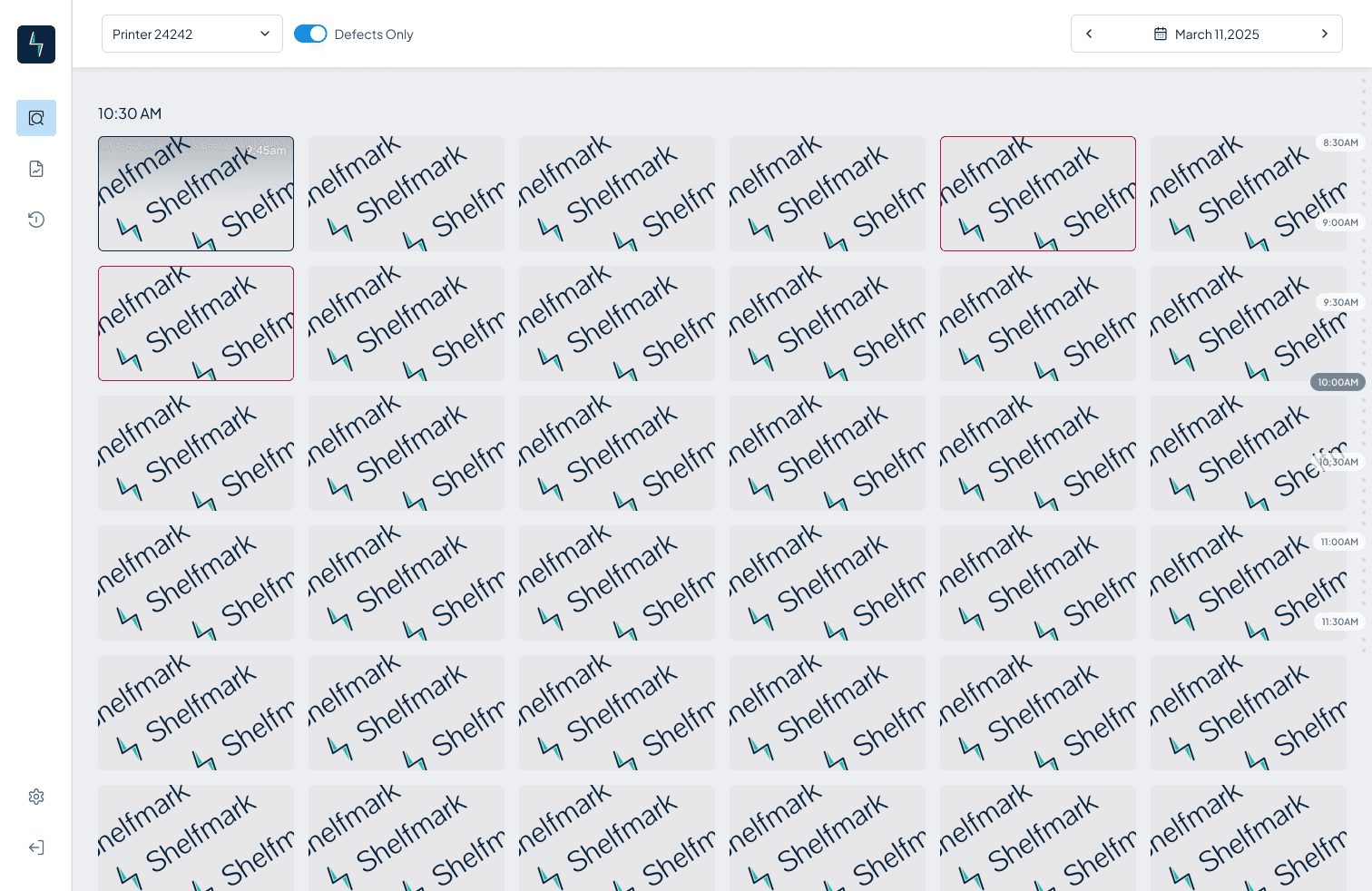
History View (FrameLog)
A time-based record of defects, decisions, and machine activity
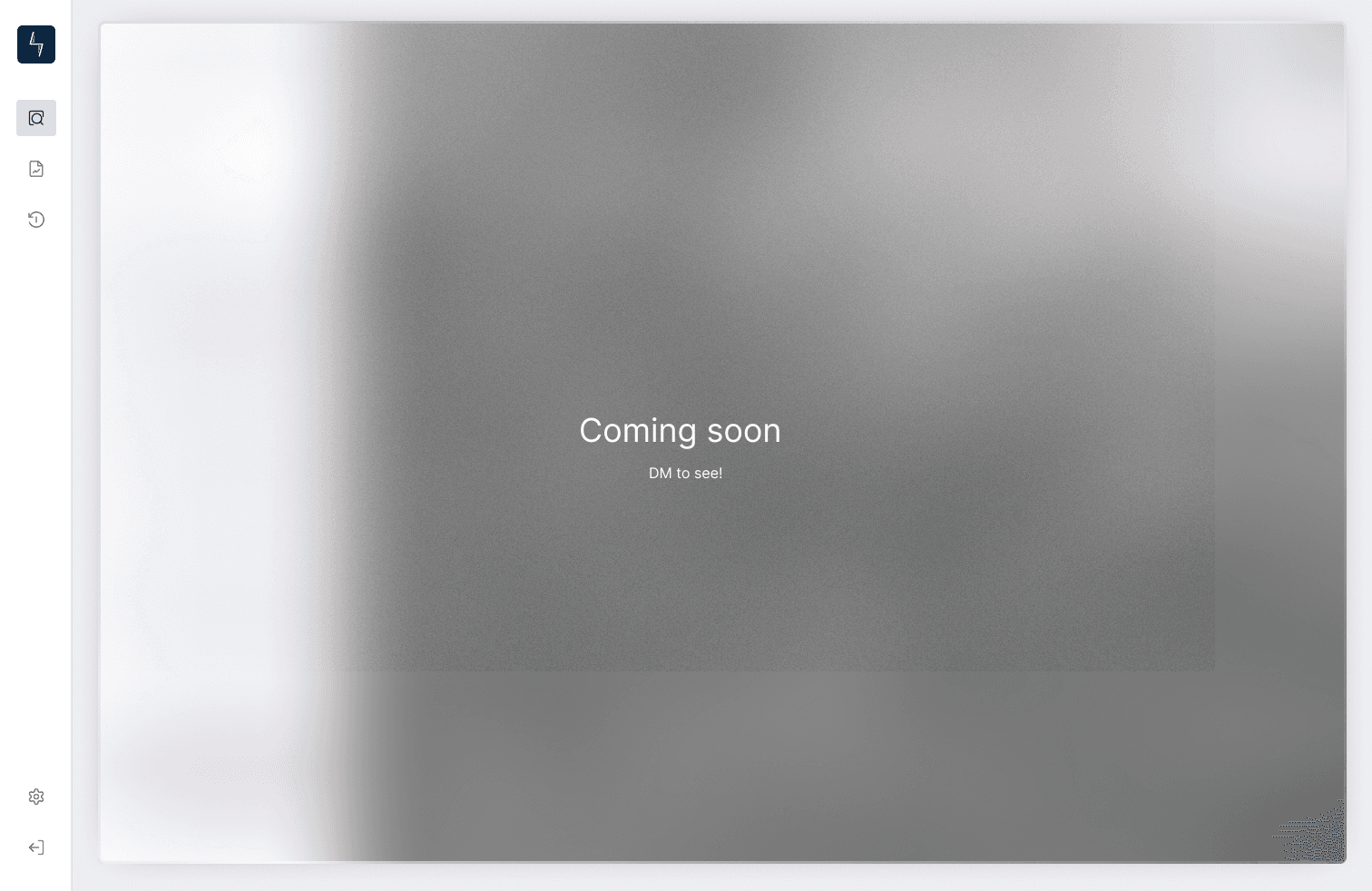
Settings/Help Center
Scaled support and customization options
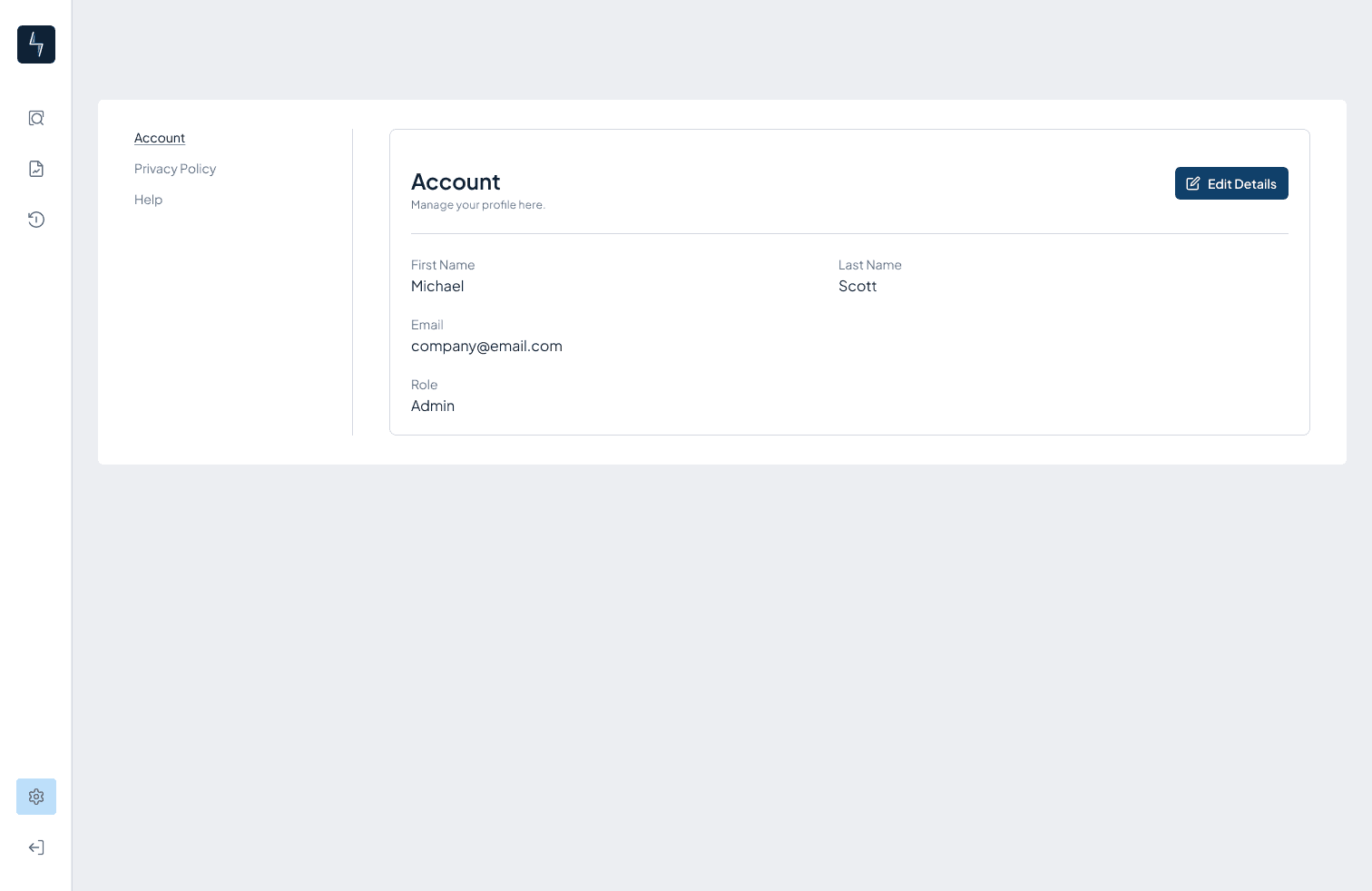
Defect Map
Visualized micro/macro view of continuous manufacturing lines through dynamic layouts
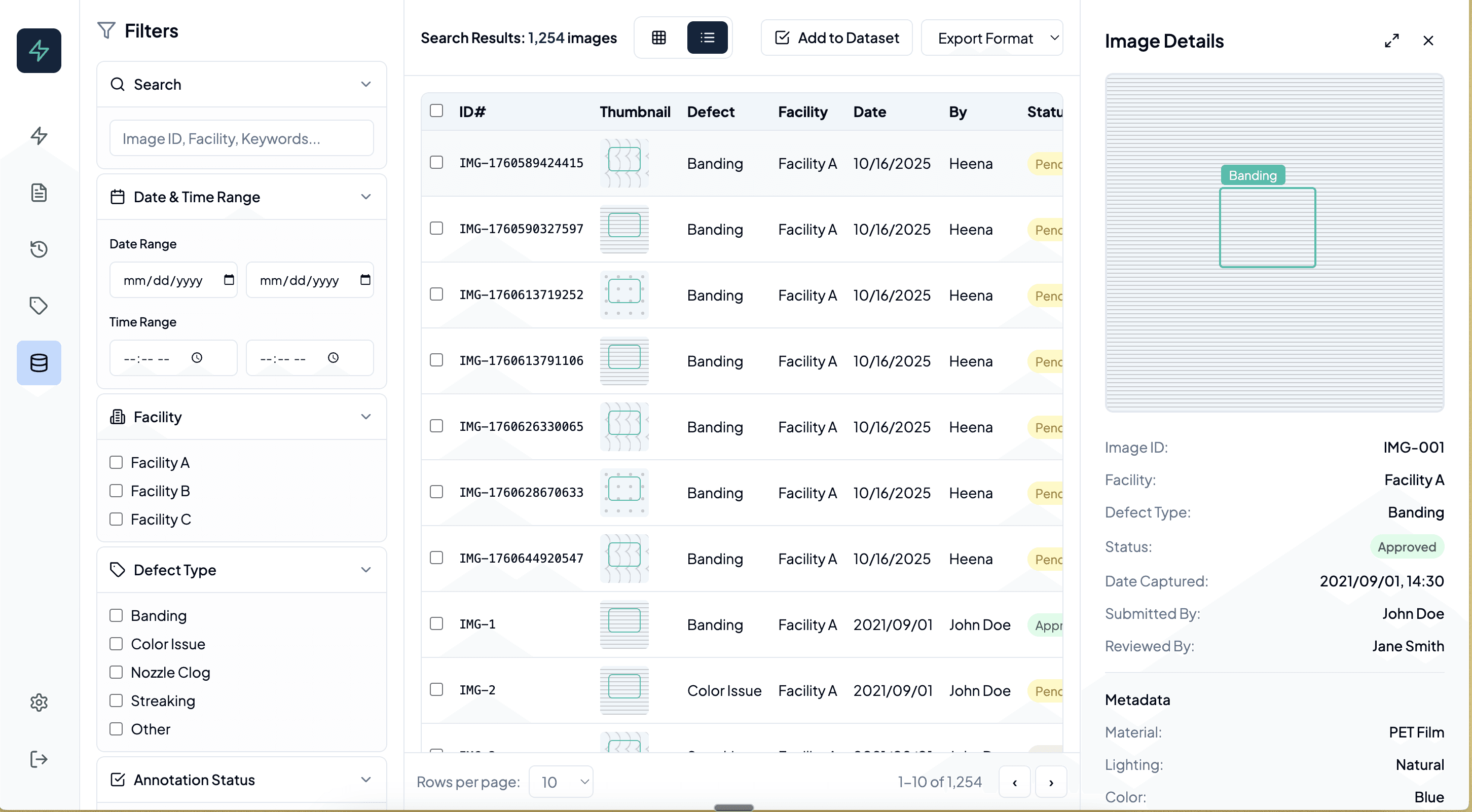
Internal ML tool
An operator-powered data labeling tool that generates high-quality training datasets from real-world detection errors.
Product Strategy
I also led product requirement writing, created journey maps, ran audits, and developed personas—along with extensive prioritization work to define and build the MVP. While these aren’t fully detailed in this case study, several of them also played a role in shaping our go-to-market strategy.
Feel free to DM me if you're curious about how I wore my product manager hat to navigate trade-offs, align business and user needs, and facilitate cross-functional collaboration.

Peanut butter cookies from Nancy B’s were our unofficial research tools. Building trust with operators mattered.
Research Approach
We knew we couldn’t design this platform from behind a desk.
We ran 50+ hours of on-site research across multiple printing facilities.
Our approach prioritized:
Contextual inquiry: Understanding operator workflows, communication, and breakpoints
Trust-building & relationship building:To integrate AI into operations, we had to first integrate into their culture
Shadowing across roles: From operators to managers
Feasibility study (to understand lighting, internet connections, etc)
Why I'm Proud
This project pushed me to think beyond interface design — to understand systems, build relationships with users in loud, high-speed environments, and shape a product that fits the reality of manufacturing floors. It taught me how design can earn trust, enable innovation, and make AI actionable.